How have customer expectations regarding environmental issues changed today?
Anne-Sophie Meyer: Today, brands are under increasing scrutiny, whether by end consumers or when they’re part of large corporate groups, for example. As a result, they’ve made commitments to reduce their carbon footprint and must act in an environmentally responsible manner. So it’s true that today, most of our clients—if they’re committed to making a positive impact—will ask their suppliers to help them gain a better understanding. And above all, to see how, without compromising the brand’s DNA, they can reduce their carbon footprint.
Marco Stefanovic: That’s right—environmental considerations are an increasingly important factor in decision-making and will continue to play a key role in customers’ purchasing decisions. As you mentioned, many brands have set CO₂ reduction targets to be achieved by 2030. So, to align with those goals, it’s important to support them. There are also regulations at the European level—notably the CSRD (Corporate Sustainability Reporting Directive)—that will require certain companies to adopt tools that comply with these standards in order to meet regulatory requirements, and this creates pressure not only on your clients but also on your teams. So it’s important to address these environmental issues. At EcoDesignCloud, we’ve noticed that demand is becoming increasingly operational. In fact, this is no longer an issue driven solely by CSR departments; it’s now integrated into procurement, design, and sales teams… Clients want evidence backed by data and actionable metrics—not just a “window-dressing” approach—so it’s important to have concrete tools available on the market.
Anne-Sophie Meyer: I find what you’re saying really interesting, Marco, and I think it’s important because today we can all do LCAs (Life Cycle Assessments), even if we don’t know much about them. And that allows us to make comparisons, and even if we don’t know exactly what’s behind it, we can still understand the main message. In the past, we used more complex terms that required more specialized knowledge and could therefore seem vague or abstract to some people. Today, we’re all speaking the same language.
Marco Stefanovic: Exactly, and that’s the goal: to establish a market standard so we can compare like with like. So if everyone uses the same environmental criteria for their calculations and the same types of standardized reports, we can consolidate the reports to provide year-end analyses and results that are concrete, actionable, and auditable.
Specifically, at what point does EcoDesignCloud come into play in your interactions with customers?
Anne-Sophie Meyer:
There are various scenarios. We’ll use the tool at every stage, depending on our clients’ needs. We can use it internally—even without the client asking—when we’re in the design phase and about to start creating, so we can propose the most eco-friendly options early on, and continue using it later during discussions in the development phase. It’s actually quite common for the briefs we receive from clients to include several options, so EcoDesignCloud will help with decision-making and can also guide our client’s marketing department—sometimes leading them to conclude, “No, this option isn’t viable because it isn’t eco-friendly enough.” This will really empower the client to make the final call. We’ll also inevitably use it once production is complete, since this data—whether for us, Anaïk, or the client—can be incorporated into our carbon footprint assessments. Brands are increasingly asking us for more information about the environmental impact of their products. So the tool is used at every stage of development—and I’d even say all the way through—since we’ll also use it for transportation, so it’s truly a tool used from start to finish.
How does EcoDesignCloud help make these discussions more concrete and objective?
Marco Stefanovic: Before EcoDesignCloud, everything was largely based on claims, promises, and good intentions. In fact, we had very little solid data to help us make informed decisions. And the advantage of EcoDesignCloud is that we have real numbers on the table. We rely on scientific criteria validated by the European Commission that are audited. As we mentioned earlier, this allows us to speak the same language—and thus to have results that are shared by everyone, whether it’s the client, the supplier, the design teams, or production. Another advantage is that the report is easy to read and easy to compare. Overall, we’re moving from simply thinking it’s better to actually seeing that it’s better, backed by a concrete report where we can clearly identify the pros and cons.
How does EcoDesignCloud change the way decisions are made on a project?
Anne-Sophie Meyer: In addition to conducting a study on complete products, the platform allows users to compare specific product components (such as logo design, closure systems, lining materials, etc.). This is because sometimes brands won’t be able to change everything, but they can focus on small details.
Marco Stefanovic: That’s right, and the comparisons you can make with EcoDesignCloud are almost instantaneous. You just enter the information, and it generates an LCA report in a matter of minutes. And if, for example, the client were to go through an external service provider, it would take several weeks to get that result. And what you do at Anaïk—which I think is great—is that working this way allows you to make eco-design choices right from the briefing phase, rather than just at the end of the process during production, when in fact 80% to 90% of the impact has already been determined. And that’s what’s also changing with this tool: it allows us to consider cost, aesthetics, and environmental impact all at the same time.
At Anaïk, how do you use EcoDesignCloud to support your clients without limiting their choices?
Anne-Sophie Meyer: If the brief comes from them, we’re not necessarily going to tell them that what they’re doing isn’t eco-friendly. In any case, I think clients are already very aware of what they need to do to become more eco-friendly. What we do—and this is truly part of our DNA at Anaïk—is propose a potential alternative, more eco-friendly option, while of course staying true to the brand’s identity. We take on an advisory role while, of course, respecting everything that’s important to the customer. I think that today, this is exactly what they expect from their suppliers: comprehensive support—not just doing what they’re asked—but they definitely need us to guide them and provide solutions to help them become more eco-friendly. This is now a real asset for Anaïk, and it can even help us win bids.
Why is it essential to give customers a choice, even when impact data is available?
Marco Stefanovic: Because EcoDesignCloud is truly a decision-support tool—we’re not a prescriptive tool, we’re not here to impose choices; our role is really to guide users, as Anne-Sophie rightly pointed out. In fact, clients always have other constraints that the tool isn’t aware of or that fall outside the tool’s scope. There are budgets, there’s time to market, and EcoDesignCloud’s goal isn’t to impose “virtuous” choices, but rather—I’d say—to empower stakeholders so they can make informed decisions about environmental impacts, understand what could be improved, and move forward gradually, step by step. It is this empowerment that will drive long-term, sustainable change.
What specific benefits do your customers get from using EcoDesignCloud?
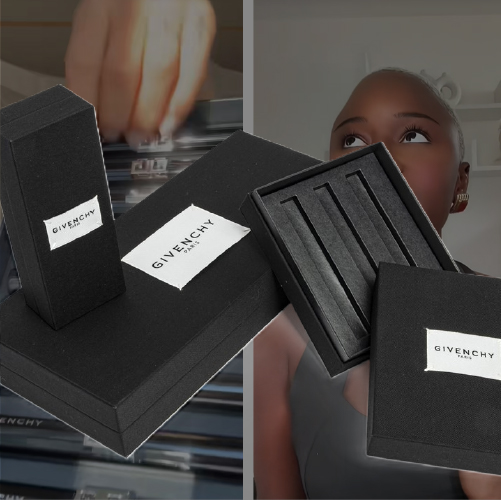
Anne-Sophie Meyer : Plusieurs de nos clients ont été assez surpris de voir les résultats justement quand on fait des comparaisons de certains composants. Je prends l’exemple qu’on avait fait sur des logos (classement consommation CO₂ : embossage < Zamak recyclé < marquage à chaud < broderie), on en parle encore en me disant que les résultats étaient très surprenants, et que ce n’était pas du tout ce qu’ils imaginaient. Donc en fait ça permet de changer aussi certaines croyances que tout le monde avait tendance à affirmer sans avoir de « preuves », ou en tout cas de données qui venaient les confirmer. Aujourd’hui grâce à cet outil, quand les clients obtiennent une donnée elle est fiable et ils vont aller la diffuser aussi en interne et essayer de s’appuyer dessus pour prioriser des changements ou pour leur prochain développement. Ils sont également très satisfaits de pouvoir faire appel à cet outil lorsqu’il y a une hésitation, c’est vraiment un outil d’aide à la décision et d’aide à la progression, car ça leur permet de savoir comment construire leurs briefs des années à venir.
Marco Stefanovic : Ce que vos clients en retirent en fait, c’est aussi l’aspect collecte de données. Ce qui facilite beaucoup les choses pour eux, c’est que c’est une plateforme qui est directement intégrée dans votre système, ce qui leur permet d’avoir les résultats de toutes les commandes qu’ils ont passées auprès d’Anaïk directement sur une seule plateforme et de ne pas avoir à aller chercher ces informations eux-mêmes par d’autres biais. Donc ça fluidifie l’échange et ça simplifie aussi la collecte de cette donnée-là.
In your opinion, what role will these tools play in the coming years?
Marco Stefanovic: I think we’re heading toward inevitable market standardization today. In fact, customers are using the same PEF (Product Environmental Footprint) framework via the platform. In the future, the vast majority of your industry will be speaking the same language, particularly with the CSRD and the PPWR (Packaging and Packaging Waste Regulation) coming soon—regulations that will accelerate this trend. And here at EcoDesignCloud, we’re already preparing with reporting export solutions that are—or will soon be—compliant with regulations, which are on our roadmap. So, in my view, the eco-score and, more broadly, tools like EcoDesignCloud will become a prerequisite on par with technical specifications. It’s going to become an industry standard, which is why leading companies, like Anaïk, are already starting to prepare to stay one step ahead.
If you had to sum up EcoDesignCloud in one sentence from the customer's perspective?
Anne-Sophie Meyer: “LCA is key to designing gifts and packaging that are truly more sustainable, based on reliable data rather than common misconceptions.”
Marco Stefanovic: “ EcoDesignCloud is the standard that turns an environmental commitment into a concrete, measurable action shared across the entire supply chain, from the brand to the supplier.”

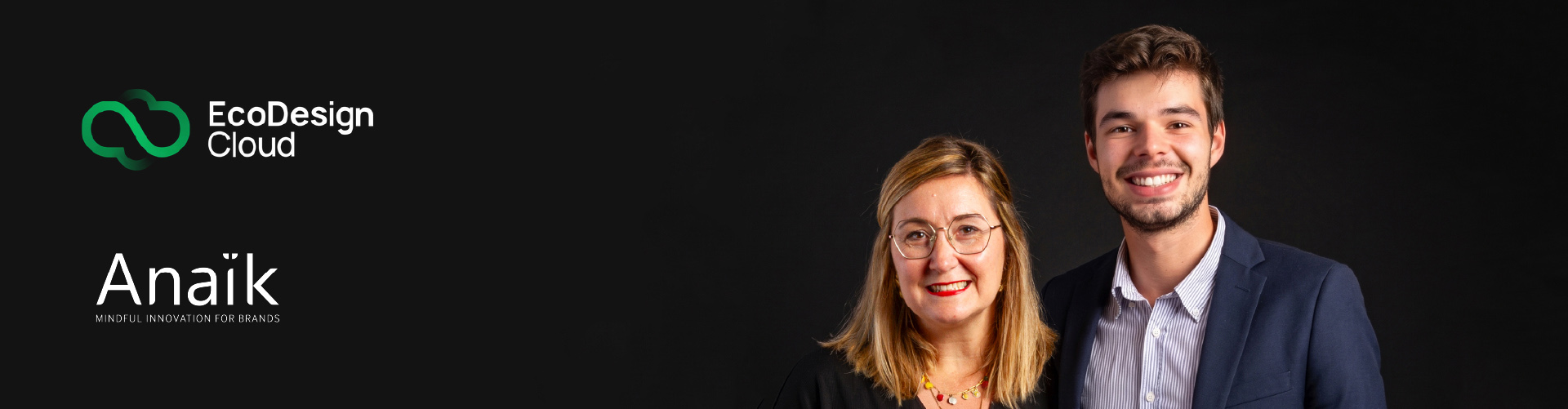
Founded in 1973 in Roubaix, Anaïk is a leading company in the design and supply of gifts, packaging, and accessories for major international brands and retailers. Its headquarters are located in Villeneuve d’Ascq (59). Committed to sustainability, Anaïk has integrated CSR into its strategies for over 18 years, becoming an expert in eco-design